7 hotspots you must visit in Jerusalem
Jerusalem is a journey just by walking and looking.
The entire city is a museum, and Jerusalem is a city of cultural diversity, with a colorful and awe-inspiring history.
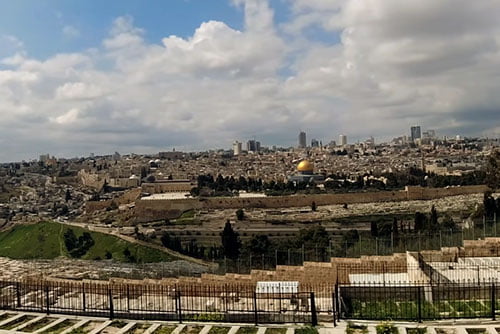
Tour the Old City
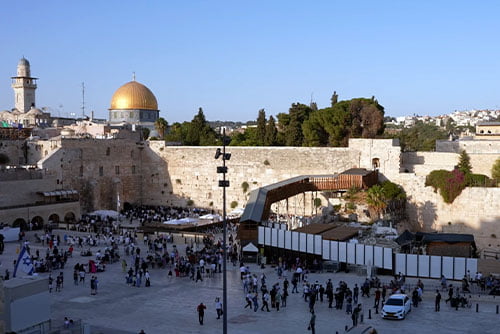
Private Walking Tour in the Old City of Jerusalem
There are only three things you need to keep in mind when traveling to Jerusalem. Plenty of time, comfortable walking shoes, and the realization that you don’t have to be on a pilgrimage to find it fascinating. By simply walking a lot, you’ll discover a new side of Jerusalem and its charms as a travel destination. If you’re staying in a good location, you’ll be able to walk more easily, and if you’re free, I recommend the Mamila neighborhood. From here, most of the city’s major attractions, including the Old City, are just a short walk away. The Old City route starts at Jaffa Gate and takes in the entirety of the Old City, including the Tower of David, the City Center, the Western Wall, the Church of the Holy Sepulchre, and the Arab Market.
Tower of David
After passing through Jaffa Gate, you will come to the Tower of David, one of the landmarks of Jerusalem’s Old City. Once you pass through the magnificent main entrance, you’ll be transported back to ancient times. Built in the 2nd century during the Hasmonean dynasty, this fortress played a major role in protecting Jerusalem, and now serves as a museum documenting the city’s history. You can climb to the top of the tower for a panoramic view of Jerusalem, including the Dome of the Rock with its impressive golden dome, and walk along the ramparts. In the evening, it becomes the stage for a spectacular show. The Tower of David and its illuminations represent the history of Jerusalem.
Western Wall
This is the most iconic attraction of Jerusalem’s Old City. The Western Wall is the western part of Jerusalem’s Second Temple and stretches for about 500 meters. It is considered one of the holiest sites in Judaism. It’s a pilgrimage site for Jews from all over the world and is the heart of their religion.
What we usually see is the Western Wall, a 70-meter stretch of wall and people praying holy in front of it. But it doesn’t end there.
The Western Wall Tunnels takes you through narrow, secret passageways to face the Western Wall hidden beneath the ground. It’s an intimate look into the heart of one of Judaism’s holiest sites. You’ll also get to see another side of the Western Wall, one that’s been carved over the course of some 1950 years, giving you a glimpse into the time and space of the ancient Jews. By the way, travelers often know the Western Wall as the Wailing Wall, but locals don’t call it that.
Church of the Holy Sepulchre
A church built over the tomb where Jesus Christ was laid to rest after his crucifixion.
This church was built on the site of the tomb where Jesus was crucified and laid to rest, located on the hill of Golgotha in the northwest of today’s Old City of Jerusalem. It is also known as the Church of the Holy Sepulchre and the Church of the Holy Sepulchre.
The Bible says, “Where Jesus was crucified, there was a garden, and in the garden was a new tomb, where no one had yet been buried.
Mount of Olives
Jerusalem Mount of Olives Tour
Jerusalem’s mountain where Jesus Christ is said to have ascended to heaven.
It is a ridge to the right of the Old City of Jerusalem, east of Jerusalem, 815 meters above sea level, and has been covered with olive trees since ancient times. It is said that the mountain was named the Mount of Olives because of the abundance of olive trees. On your way up the mountain, you can see the beautiful Golden Gate, the only one of the eight gates of Jerusalem that remains unused and closed, from the Garden of Gethsemane, and view the City of Jerusalem from the Mount of Olives observatory.
israel museum
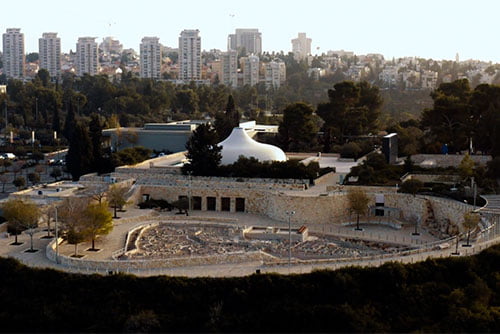
Israel Museum Must See High-Lights
The Israel Museum is the largest cultural institution in Israel and one of the world’s leading museums dedicated to art and ancient to modern history and culture. It is located on a hill in the Givat Ram neighborhood of Jerusalem. Both the interior and exterior are interesting and awe-inspiring, from the architecture and unique shape of the building to the famous “Ahava” (love) statue outside the museum. Travelers who visit the museum will gain a wealth of knowledge and experience on a variety of topics, including ancient Israeli history and culture, Jewish heritage, Jerusalem’s urban development and transformation, and contemporary art. We recommend visiting the Second Temple model, the Shrine of the Book, and the Archaeology Wing in that order.
City of David
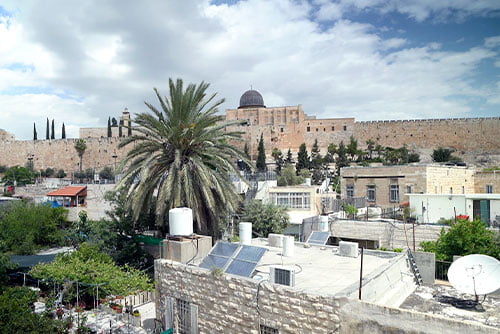
Underground Jerusalem and City of David Tour from Jerusalem
The City of David is Israel’s most famous site, with its mysterious ancient legends of King David and King Solomon. It is located on a hill south of the Old City of Jerusalem. It is now part of the Palestinian Territories.
The City of David is where Jerusalem began, when David captured a castle from the Jebusites around 1004 B.C. and made it his capital. The City of David, Zion, and Jerusalem are used interchangeably to refer to what was then called “Mount Zion” when David took it from the Jebusites, but in modern times, the castle built by Shuleiman is referred to as Jerusalem City to distinguish it from the castle on Mount Zion.
It was excavated from 1978 to 1982 by Prof. Yigal Shiloh of the Hebrew University. The City of David includes the Hezekiah Tunnel, the Gihon Spring, and the Shiloh Rock.
Jerusalem Archeological Park
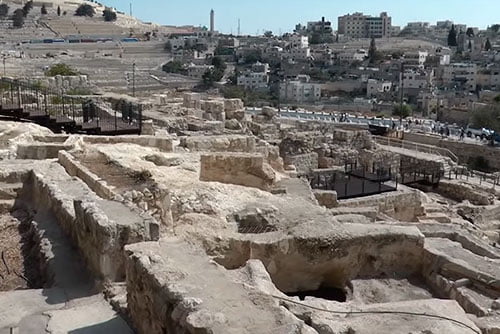
Underground Jerusalem and City of David Tour from Jerusalem
The ruins of Solomon’s central palace and nobles’ residence
If you step out of the manure gate close to the Western Wall, you can see the excavations just below the city walls. You’ll see that the excavation of the Tel has been carried out to a great depth, revealing the layers of time that have been laid down in the Tel.
Garden Tomb
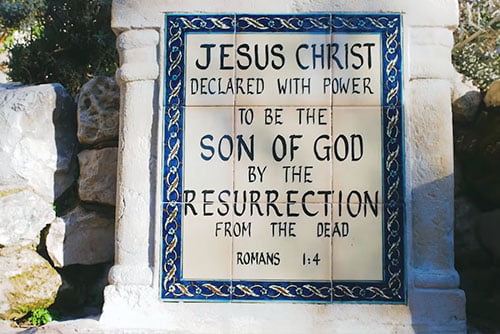
One of the two sites believed to be the tomb of Jesus, the Garden Tomb is located about 300 meters north of the Damascus Gate in the Old City of Jerusalem.
In 1882, British General Charles George Gordon was the first to claim that this was the site of Jesus Christ’s death. Based on the biblical Gospel of John (chapter 19, verses 14, 38-42), Gordon identified the hill’s mound with the Garden Tomb. Gordon argued that the hill on which the Garden Tomb is located is in the shape of a skull, and therefore corresponds to the hill of Golgotha, based on the biblical book of John (19:14, 38-42); that the Garden Tomb is where Jesus Christ was buried after his death, based on the book of Leviticus (1:11); and that the Church of the Holy Sepulchre, formerly known as the tomb of Jesus, is located on the western side of the Temple Mount, which is an error. He also claimed to have found what he believed to be Jesus’ cave tomb among several Byzantine-era tombs on the site. The Church of England has accepted these claims and considers the site to be the tomb and resurrection site of Jesus Christ.
Market Tour
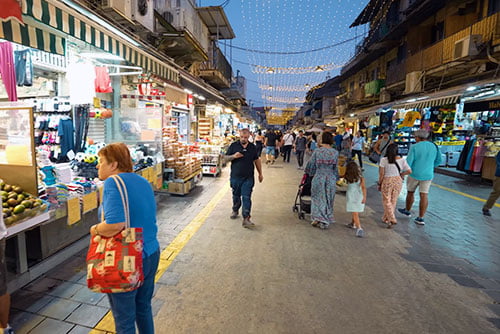
Machane Yehuda (Market MACHANE YEHUDA)
Known as Jerusalem’s largest market, Machane Yehuda is home to more than 250 large and small shops. From colorful fruit and vegetable vendors to spice markets to freshly baked pastries and burekas, explore the vibrant market. During the day, it’s interesting just to browse the market’s wares, and in the evening, it’s fun to see the street art that the vendors display after they close for the night.
Emek Rephaim Market Street
This is the starting street with many cafes, shops, and bars. Known for being stylish and trendy, you’re sure to find some great fashion finds in this neighborhood. There are regular pop-up events, night markets, art and book fairs, and a Farmers and Craftsman Market on Friday mornings. Even if you don’t buy anything, it’s fun to just browse while shopping for the kids or enjoying a delicious coffee and brunch.
Old Town Market
As you wander the endless winding streets of the Old City, you’ll find the market located between the Jewish and Muslim quarters. You can find unique souvenirs such as religious items, jewelry, ceramics, hookahs, clothing and textiles. Even if you get lost in the crowded alleyways, you’ll find shops tucked away in hidden corners, making the trip even more interesting.