7 Hotspots You Must Visit In Ljubljana
A romantic city, Slovenia’s Old City
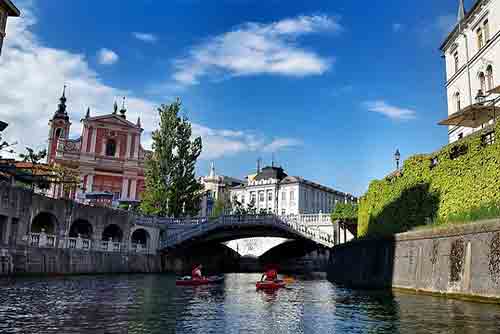
Ljubljana, whose name comes from the Slavic word for “love,” Ljubiti. Slovenia’s capital city is as romantic as its name suggests, with no hint of its communist past. The Ljubljanica River meanders beneath the Old Town’s iconic Ljubljana Castle, and delicate Art Nouveau buildings are nestled among old medieval structures. The open-air cafes and pubs along the river are even better at night.
1. Old City Bridge Tour
Ljubljana private walking tour with a local
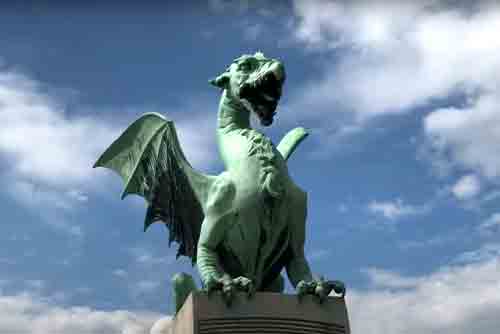
Zmajski Most
Zmajski Most is the first bridge you will encounter before entering the Old Town. It is also known as the ‘Bridge of Dragons’. Built in 1910, the bridge is decorated with four bronze dragons at each end. The bridge has long been associated with dragons. It is said that Iason, a Greek mythological hero, defeated a large dragon while crossing the Sava River into the Ljubljanica River and founded Ljubljana on the spot. The actual city coat of arms of Ljubljana also features a dragon, which in Europe symbolizes strength, courage, and greatness.
Mesarski Most
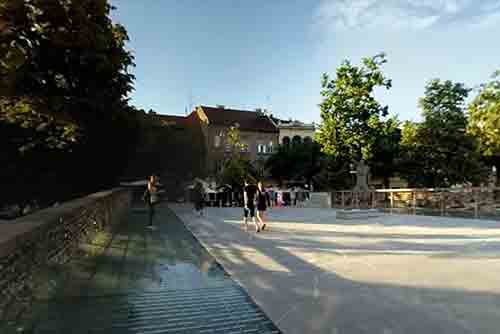
From Zmaiski Most, walk about 100 meters towards the Tromostovje bridge and you’ll find Mesarski Most. It was designed in 1930 and completed in 2010. It is characterized by its transparent glass floor. Sculptures of Prometheus, Satyros, and other Greek mythological heroes line the railings, and below them hang locks that promise love.
Tromostovje
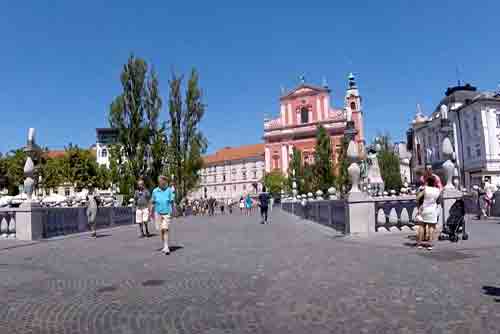
This unique structure consists of three bridges over the Ljubljanica River that crosses Ljubljana. The bridges divide the modern and historic parts of the city. It was created by the famous architect Jože Plečnik and was added to the UNESCO World Heritage List in 2021. The central bridge is made of limestone, while the rest is made of concrete.
2. Ljubljana Castle
Ljubljana City Tour Including Ljubljana Castle
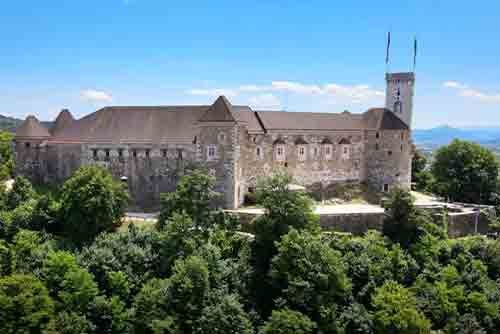
At the top of the highest hill in the Old Town sits a stunning crown-shaped castle. It’s Ljubljana Castle.
It’s located in the center of the city of Ljubljana, so you can see the whole city from the top. It’s usually climbed by purikula, but you can also walk up on foot from the Central Market and it doesn’t take much time, so if it’s a nice day, it’s worth it.
Built in 1144, Ljubljana Castle was rebuilt in the 15th century during the Habsburg Kingdom to protect against Ottoman attacks. It took its current form in the 17th century. After serving as a fortress, prison, and hospital, it was purchased by the city of Ljubljana in 1905 and now serves as an exhibition center for Slovenian history and a wedding venue. After watching a video about the history of Ljubljana Castle in the exhibition hall, head up the iron spiral staircase. At the top of the staircase is the Observation Tower, where you can enjoy a 360-degree panoramic view. Looking out over Ljubljana from the observation tower is like seeing the city in miniature. Just below the Ljubljana Castle is the Ljubljana Central Market
3. Mestni Square (Mestni Trg)
Ljubljana Small Group Food Walking Tour
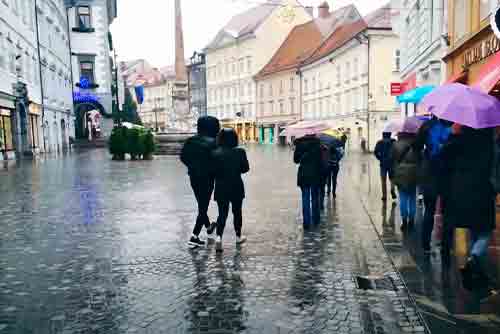
Near the Ljubljana Castle is Mestni Square (Mestni Trg). Here you can see Ljubljana’s famous Robba Fountain. It resembles Bernini’s “Fountain of the Four Rivers” in Piazza Navona in Rome. In fact, it is said to have been inspired by Italian sculptor Francesco Robba in 1751. Water pours non-stop from jars held by three giant statues, symbolizing the Sava, Krk and Ljubljanica rivers in Slovenia. Don’t miss St. Nicholas Cathedral, the tallest building in Mestni Square. Its green rounded dome and towering twin bell towers are impressive. The bronze gates commemorate the 1996 visit of Pope Paul II. Don’t miss the square’s landmark, the Town Hall building. Founded in 1484 as a court of justice, it took its current form in 1718. It is topped by a baroque clock tower. There are many open-air cafes and restaurants nearby, so it’s a great place to relax and eat. The buildings have an Eastern European feel to them, and you can feel the exoticism of the area just by walking around.
4. Preseren Square
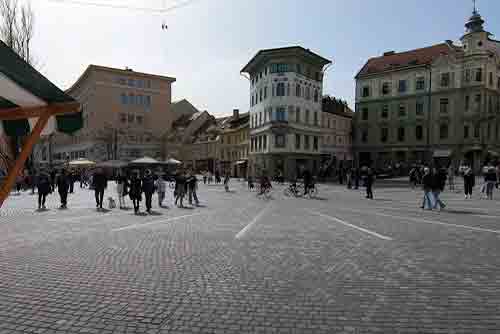
Ljubljana private walking tour with a local
The central square of Ljubljana’s Old Town is a meeting place for Ljubljana’s citizens and a venue for large and small performances.
It is part of the pedestrian zone of the Old Town, where various events are organized. As such, it’s often used as a meeting place, making it a good starting point for walking tours.
On the east side of the square is the statue of Preseren, Slovenia’s national poet. It was erected in 1905 and, together with the square, is now a national cultural monument of importance.
Preseren was a romantic poet who was active in the 19th century and his works were translated into many languages and introduced to other countries.He is considered a great Slovenian classical poet and had a great influence on later Slovenian literature.His works are characterized by unhappy love motifs that the poet experienced, which he linked to the unfortunate situation of his country’s subjugation to other countries.
5. Ljubljana Cathedral (Ljubljanska stolnica)
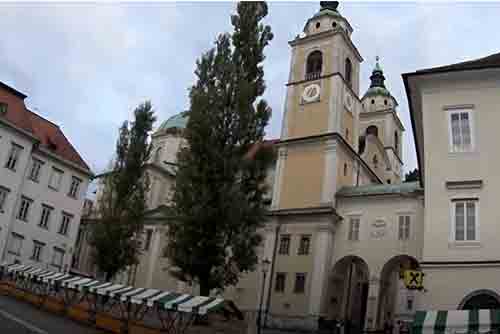
The Ljubljana’s Cathedral Tour (St. Nicolas Church)
Officially called St. Nicholas’ Church (cerkev sv. Nikolaja / Saint Nicholas’s Church) or St. Nicholas’ Basilica or Cathedral. Originally built in the Gothic style, it was replaced by a Baroque building in the early 18th century after an earthquake.Its green dome and twin towers impressively serve as a landmark of the city. Nearby are the Mesarski most, the central market, etc.
The church tower has a total of six bells, including the second oldest bell in Slovenia. Between the bell towers is a split semicircular gable.
6. Central Market (Glavna tržnica)
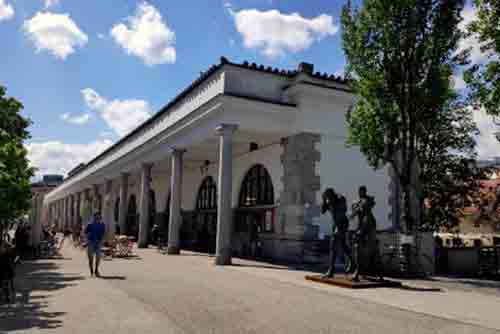
Ljubljana private walking tour with a local
The old riverside market was formed between 1931 and 1939. It is located between the Butcher’s Bridge and the Dragon Bridge and is a cultural monument of national importance. The Central Market is closed on Sundays and is open from 7am to around 2-4 pm, so be sure to check the day and time if you want to visit.
A flower market is located to the southeast of the market, and the lower level of the market building houses a fish market and dried fruits. On the other floors are bakeries, dairy products, and meat. There are also stalls selling herbs, spices, arts and crafts.
7. Franciscan Church (Frančiškanska cerkev)
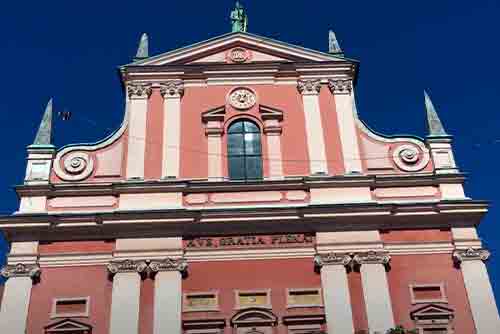
Historic Ljubljana Tour
This church is located on the Preseren Square and stands out because its facade is covered in pink tones. This red color used in church buildings symbolizes the Franciscan order.
The church was built between 1646 and 1660, replacing an older church that was originally there. The bell tower is said to have been built much later. The overall style is Baroque, with a single nave and two rows of side chapels. The main altar was created by Francesco Rova, the creator of the Rova Fountain. It is protected as an important national cultural monument in Slovenia.