

All about Surfing!
Surfing is a dynamic water sport that involves riding waves on a specially designed board, known as a surfboard. Originating in ancient Polynesian cultures, surfing has evolved into a popular leisure activity and competitive sport enjoyed by millions around the world.
1. Equipment:
To surf, you’ll need a few essential pieces of equipment:
1-1 Surfboard:
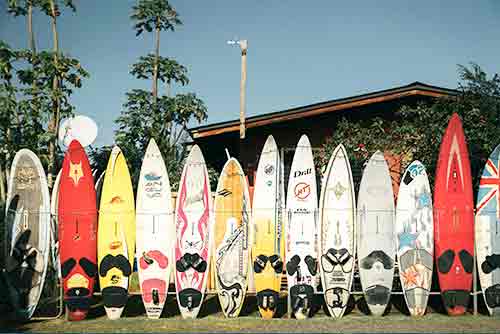
These come in various shapes, sizes, and materials, tailored to different skill levels and wave conditions.
1-2 Leash:
A cord that attaches your ankle to the surfboard, preventing it from drifting away if you fall off.
1-3 Wetsuit:
Especially important in colder water, a wetsuit provides insulation and protection against the elements.
1-4 Wax:
Applied to the surface of the board to provide traction and prevent slipping.
2. Technique:
Surfing involves mastering a variety of techniques to paddle out, catch waves, and ride them effectively:
2-1 Paddling:
Using your arms to propel yourself through the water while lying prone on the board.
2-2 Popping Up:
Transitioning from lying down to standing up on the board once you’ve caught a wave.
2-3 Stance:
Finding the right balance and positioning on the board, typically with one foot forward and the other back.
2-4 Turning:
Using subtle shifts in weight and foot placement to maneuver the board on the face of the wave.
3. Types of Surfing:
Surfing encompasses various disciplines and styles, including:
3-1 Longboarding:
Riding longer, more stable boards for a classic, smooth style.
3-2 Shortboarding:
Using shorter, more maneuverable boards for quick turns and aerial tricks.
3-3 Big Wave Surfing:
Tackling massive waves, often in remote locations, requiring advanced skill and experience.
3-4 Tow-In Surfing:
Using jet skis or boats to tow surfers into exceptionally large waves that are too powerful to paddle into.
4. Health Benefits:
In addition to being a thrilling recreational activity, surfing offers numerous health benefits:
4-1 Cardiovascular Fitness:
Paddling and riding waves provide a full-body workout that improves cardiovascular health.
4-2 Strength and Endurance:
Balancing on the board and paddling through waves build core strength and muscular endurance.
4-3 Mental Well-Being:
Being in nature, catching waves, and experiencing the ocean’s rhythm can reduce stress and promote mental clarity.
4-4 Community and Connection:
Surfing often fosters a sense of camaraderie and connection with fellow surfers, creating a supportive community.
Whether you’re a beginner catching your first wave or an experienced surfer chasing the thrill of big swells, surfing offers a unique blend of excitement, challenge, and serenity that keeps enthusiasts coming back for more.

