10 Things to Do in Beautiful Quebec City
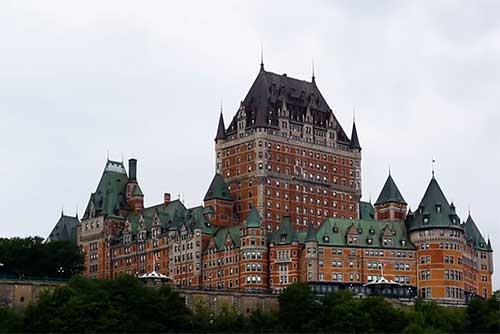
It is located on the lower reaches of the St. Lawrence River. The name Quebec means “where the river narrows” in Algonquin, an indigenous North American language. First discovered and settled by French explorer Samuel de Champlain in 1608, Quebec City has been around for over 400 years. It’s one of the most European neighborhoods in North America.
Place d’Armes

Uncover Old Quebec: Fun Walking Tour of the City with Local Guide
The center of the Old Upper Town. This is where most travelers start their tour of the Old Town. The tourist information center is also located here and is always busy with tourists. The double-decker tourist buses that take you to Quebec City’s main attractions also depart from Place d’Armes. It’s right in front of the Chateau Frontenac Hotel, the symbol of the Old Upper Town, and in the center of the square stands a statue of Samuel de Champlain, who laid the foundation of Quebec City.
Musee du Fort

A small museum with materials on Quebec’s history, wars, and more. It’s easy to find on the second floor of the restaurant, near Place d’Armes. It’s a good place to stop before exploring the Old Upper Town. The main exhibits are related to the wars between Britain and France in the 18th century, when they fought for control of the New World. The dioramas recreating scenes of British and French battles in Quebec between 1629 and 1775 are particularly impressive. There is also a gift shop with models of weapons and books about the war.
Fairmont Le Frontenac Hotel
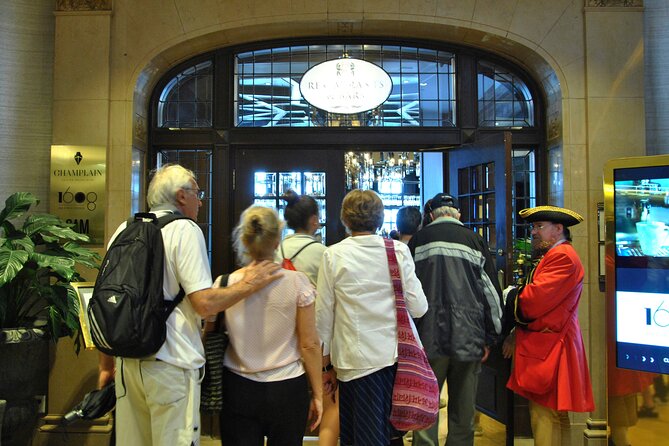
Guided Tour of the Fairmont Le Chateau Frontenac in Quebec City
This is the tallest hotel in the Old Upper Town, overlooking the St. Lawrence River. It is an iconic building in Quebec City and one of the most recognizable buildings in the Old Town. It is visible from every corner of the Old Upper Town and serves as a signpost for travelers.
Named after the governor general in 1893, it is also famous for being the site of a meeting between President Roosevelt and British Prime Minister Churchill during World War II. It was here that the D-Day landings were decided. Today, it is run by the luxury hotel chain Fairmont.
Its magnificent blue roof, reminiscent of a European castle, is impressive, as is its quaint facade, which is ubiquitous in the old town. Once inside, you can feel the 200 years of history. The delicate wood carvings on the walls and ceilings, antique furniture, and antique chandeliers give you a sense of its history. As it is considered a historic site in Quebec City, it is strictly forbidden to renovate or change the furnishings.
Terrasse Dufferin

A 400-meter-long wooden deck walkway along the St. Lawrence River behind the Chateau Frontenac Hotel. It offers panoramic views of the St. Lawrence River and Lower Town, making it one of the best views in Quebec City. The terrace is dotted with benches facing the St. Lawrence River, making it a great place to sit and take in the scenery. The promenade leads from the Chateau Frontenac Hotel, past the Citadel, and out to the Plains of Abraham. In the summer, you’ll find residents, painters, and street artists out enjoying the sunshine.
Notre-Dame Basilica of Quebec City

Built in 1647, this is the oldest Catholic cathedral in North America. It is one of Quebec City’s most iconic structures. After being destroyed by war in 1759 and several fires, it was repaired and completely rebuilt in 1922. The bell tower and walls have been preserved as they were when it was first built. The word “Notre Dame,” which is often used as the name of the church, refers to the Virgin Mary, while “basilica” means that the church has been granted privileges by the Pope.
Along with Notre-Dame de Montréal in Quebec and Notre-Dame de Ottawa in Ontario, it is one of three Notre-Dame cathedrals in North America. Despite its austere exterior, the interior is opulent. There is much to see, including the sanctuary altar and stained glass windows, a magnificent yet delicate organ pipe, and statues and paintings of saints on the walls. In the basement of the cathedral, the first bishop of Quebec, St. François de Laval, is buried, along with the governors of the New France period and all the bishops of Quebec. On summer nights, there are multimedia light shows and guided tours of the cathedral for travelers.
Hotel de Ville de Québec

Located opposite Notre-Dame Basilica, this archaic-looking building is Quebec City’s city hall. It was built in 1895. It’s a bit off the beaten path as Quebec’s provincial capitol is located in Quebec City, but the interior is as ornately decorated as the exterior, and it’s worth a look after visiting Notre-Dame.
Rue du Tresor

Also known as the Painter’s Street. This 50-meter alleyway is lined with paintings and prints on both sides. They are all works by Quebec City street artists. The artists themselves display and sell their paintings. You can also watch them paint in their spare time. If you see a painting you like, be sure to negotiate the price with the artist.
Holy Trinity Anglican Cathedral
This cathedral was built in 1804. It was the first Church of England cathedral outside of England. It is filled with cultural treasures donated by King George III of England. The most striking feature of the cathedral is the Royal Box on the second floor. It was the seat of the king and only the Queen of England or her representative could sit there. The chairs in the church are all made from oak wood from the Royal Windsor Forest in England.
Le Monastere des Augustines

For something a little different, head to Le Monastere des Augustines, located halfway between the ViaRail train station, Gare du Palais, and the Notre-Dame de Québec Basilique- Cathédrale.
The Monastery of Augustine was built around 1800, and the University Hospital is located right next door. The building retains its old-world charm, with a restaurant and souvenir shop on the ground floor and a quaint hotel upstairs where you can stay in small rooms where the nuns actually lived. There’s also a museum with more than 40,000 artifacts from Augustine Abbey’s time as a hospital, as well as a variety of scientific research from the time. You can also explore the chapel and other artifacts from the church.
Laiterie Charlevoix
Now let’s head to one of Quebec’s most iconic cheese factories. A short drive north of Saint-Paul on Route 139, you’ll find Laiterie Charlevoix, which has been making a name for itself since 1948.
The shop, which sells cheese and other dairy products, as well as organic sausages, is open to the public, as is the restaurant, where you can enjoy a bite to eat. But it’s worth signing up for a tour guide, who will take you from building to building in the sprawling fields to learn more about the history of Laiterie Charlevoix and the cheese-making process. Even though they don’t have their own cows, you can still get a glimpse of how they know how to make quality dairy products from the milk produced in Charlevoix.