5 best things to see and do in Piran
Piran is a small town in Slovenia with around 4,000 inhabitants. You can walk around the entire town in one day. Despite this, Piran holds the record for being the second most visited city in Slovenia by tourists as of 2022.

The reason why this small city has become such a popular tourist destination is because it’s a port city. Slovenia is a landlocked country, so land facing the sea has long been scarce. Piran offers a unique view of the sea from almost anywhere in the city, which is something you don’t often see in Slovenia.
Piranski svetilnik and Plaža Piran

The Piranski Lighthouse is the most refreshing way to start your morning in Piran. For an entrance fee, you can see the inside of the lighthouse and climb up to the bell tower at the top. From the bell tower, you have a great view of the old town of Piran and the sea.
Inside the lighthouse, you’ll find photos and paintings of Slovenian landscapes, as well as rooms where the lighthouse guards used to live. You can visit Piranski Lighthouse 24 hours a day, every day.
Dip your feet into the clear blue Piran Sea that surrounds the lighthouse. The water is so clear and calm that many people enjoy skinscuba. Unfortunately, there are no soft sandy beaches. It’s best to bring a mats as the area around the sea is gravelly.
There are parasols and sunbeds in the flat cement stone area, but they are few and far between. If you’re lucky, you can see the dolphins that often show up here. There are plenty of restaurants and cafes around, so it’s a great place to take a break. Piran Beach can be visited around the clock.
Akvarij Piran & Sergej Mašera Maritime Museum

Meet 140 species of Slovenian marine life at the Piran Aquarium. In the aquarium, you can come face to face with a variety of sea creatures that live in the Northern Adriatic, including bream, jellyfish, eels, moray eels, catfish, sharks, seahorses, octopuses, starfish, and more. The visit takes about an hour. The aquarium is open daily from 10 am to 9 pm. You can enter up to 20 minutes before closing time.
Just a two-minute walk from Piran Aquarium is the Sergej Masera Maritime Museum. The museum is housed in the two-story Gabrieli Palace, a 19th-century residence of the Slovenian counts. The museum is named after Sergej Masera, a Slovenian war hero and naval commander.
The exhibits include items related to Piran maritime history, such as bone harpoons, shipwrecks, a model of a medieval Slovenian fishing boat, a model of a steamboat, anchors, and 19th- and 20th-century Slovenian sea paintings. Take a photo in the experience area, where you feel like you’re walking on the transparent sea. Scan the QR code and listen to the English audio guide. The museum is closed on Mondays. Tuesday through Sunday, the museum is open from 9 a.m. to noon and then reopens from 5 p.m. to 9 p.m. The tour takes about an hour and a half.
Tartini Trg and Town Hall

Trip to Piran every day starts at 11:45 next to Tartini monument
A square named after Piran-born musician Giuseppe Tartini. The white Town Hall building stands majestically behind a statue of Giuseppe Tartini with a violin. The Town Hall was originally built in the Gothic style under the Venetian duchy, and was later renovated in the Renaissance style under the Austrian Habsburgs. Meanwhile, Giuseppe Tartini was a composer and legendary violinist who wrote the famous “Devil’s Trill”.
A white building flying the Slovenian flag. Built by the Venetians in the 13th century in the Roman Gothic style, it was renovated in the Renaissance style in the 1870s during the Habsburg rule. On the facade stands a roaring sculpture of the Winged Lion, the patron saint of Venice. It’s amazing that it survived the Habsburg rule intact. The lion is pressing down on a book with its forepaws, symbolizing the country’s peaceful times when the book is open, and war when it is closed. On the first floor is the information center.
St. George’s Cathedral
(Župnijska cerkev sv. Jurija)

Piran Old Town Walking Tour
Leaving the harbor behind, climb the 47-meter-high, walled hill to Piran’s largest church. It’s St. George’s Cathedral, built in 1344 in honor of Piran’s patron saint, St. George. It was rebuilt in 1637 in a unique style that combines Renaissance and Baroque architecture.
From anywhere in Piran, you can see its pointed spire piercing the sky. If you look closely, you’ll see a statue of the Archangel Michael atop the bell tower, looking down on the city as if to watch over it. This is George’s Cathedral, which offers one of the most beautiful views in Piran. Built in 1344 in honor of St. George, the patron saint of Piran, it was rebuilt in 1637 in a style that combines Renaissance and Baroque elements.
The bell tower with an observation deck is modeled after the red bell tower in St. Mark’s Square in Venice. Note the marble altar and the frescoes on the ceiling, dating from 1737. Unlike other churches, only the baptized are allowed to enter the nave. The bell rings at 2:00 pm. Even if you don’t climb the bell tower, you can stand in the square in front of the church and get a great view of Tartini Square.
Škocjan Caves
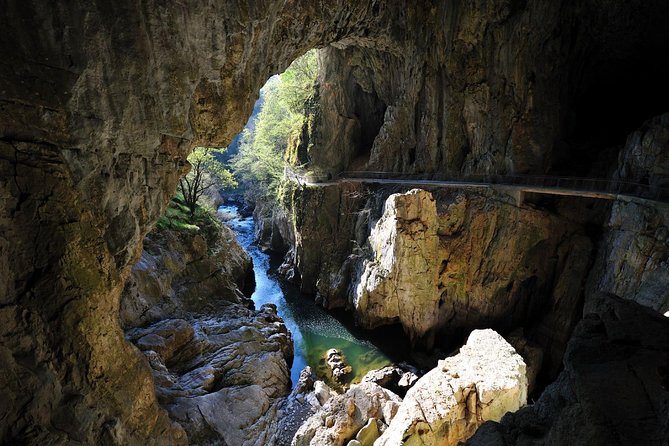
Skocjanske Caves Unesco Site – Private Tour from Trieste
Shaped by the Reka Waterway, which actually moves through this underground gulch, the Škocjan cave framework is a 4-mile (6-kilometer) organization of interconnected caverns and perhaps of Slovenia’s most noteworthy normal fascination. The UNESCO World Legacy Site incorporates enormous chambers, pools, sinkholes, and large size cave rock formations and stalagmite.
More to see
City Walls Mestno Obzidje

Built between 1470 and 1534, the walls initially surrounded the city like a fortress. Most of it was destroyed during the Habsburg rule, and only a 200-meter-long wall and seven gates remain today. From the top of the ramparts, you can take in the vastness of the Adriatic Sea, a peninsula jutting out triangularly into the sea. On a clear day, you can clearly see Italy on the right and Croatia on the left. The Adriatic Sea, seen from the city walls, is the background of many of the postcards sold in Piran.
Church of St. Francis
(Cerkev Sv. Frančiša)

The church was founded in 1301 on the site of a former cemetery, next to a Franciscan monastery. Built in the Italian Lombardy style, the church of St. Francis was given its current appearance in the 19th century, and is particularly famous for the holy paintings that fill the chapel. Painted in the 17th and 18th centuries, they depict biblical figures in great detail, including the Last Supper and portraits of St. Mary Magdalene, St. John the Baptist, St. Peter, St. Paul and the Samaritan woman. The most famous of these is Mary with all the Saints. Painted by Victore Carpaccio in 1518, it was imported from Aedicula, Italy in 1940.
Once you’ve spent some time in reverence in the chapel, head to the monastery, which has an atrium surrounded by cloisters. Monks wandering the cloisters in silent retreat, sunlight streaming through the atrium, it’s a European cathedral of dreams. It has one of the best atrium designs on the coast, with elegantly designed archways and delicate carvings on the eaves. Don’t miss the eccentric pews, carved from the roots of a 500-year-old tree.
Tartini’s House,
the house where Tartini was born and raised
Slovenia’s birthplace of world-renowned composer Giuseppe Tartini. The oldest building on Tartini Square, it’s so small and unassuming that you wouldn’t even notice it if it didn’t have a banner hanging on it. Built in 1384 in Gothic style, it was later renovated in neo-classical style and painted in lemon yellow in 1991. Today, the first floor is a cafe and the second floor is a museum that displays Tartini violins.
Venetian House
This Venetian-style mansion is located on Piazza Tartini. The city was ruled by the Venetian Republic for a long time, so the entire area has a strong Italian color. Among the pastel-colored buildings, this lovely pink facade stands out, a gift from a wealthy Venetian merchant to a Piran woman in 1450. The merchant, who had made a fortune in trade, fell in love with the young and beautiful woman and would give her gifts whenever he stopped in Piran. The people of Piran gossiped about their relationship, and a lesser man built a house for her near the harbor. Below the lion statue on the second floor, the inscription reads “Lass a Pur Dir,” which is Latin for “If you’re going to talk, talk.