The hotspot courses in Montenegro
Montenegro is a country in the karstic region of the Balkans, with the Adriatic Sea to the west, a developed resort area, and mountains, lakes, and gorges in the mountains of the north that form a national park.
The country is also rich in historical and cultural heritage, including the monastery of Cetinje, which houses the right hand of John the Baptist and a fragment of the Holy Cross on which Jesus was crucified; Ostrog, a monastery on a vertical cliff where many healing miracles have been reported; and the fortified Venetian-era town of Kotor, a UNESCO World Heritage Site.
The name Montenegro means “black mountains” in Italian, and true to its name, black limestone mountains are everywhere.Between the blue Adriatic Sea and the black Dinar Alps, Montenegro’s scenery is breathtaking.
Podgorica
+ Ostrog Monastery
+ Danilovgrad Course
Ostrog monastery – Niagara waterfalls & Skadar Lake National Park
Podgorica
Podgorica first became the capital in 1946, and through World War II and Yugoslavia’s civil war, the city was bombed and rebuilt.After gaining full independence from Serbia in 2006, the social turmoil continued for a while, but the city has since taken on the appearance of a modern city and has revitalized its economic businesses, including industry, exports, and banking.Aside from the remnants of the former Turkiye (Turkish) villages from the 15th to 18th century Ottoman Empire, there are few historical attractions, so few travelers stay in Podgorica for sightseeing other than to use Podgorica International Airport or the central station.
Ostrog Monastery
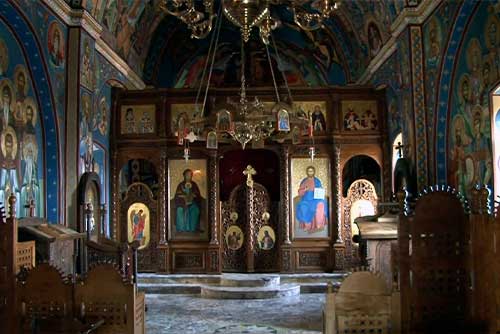
Ostrog Monastery was founded in the 17th century by the monks of St. Sloba’s Monastery. The monastery is built on a huge boulder, the height of which reaches 900 meters. This unusual location allows those who visit the monastery to enjoy the scenery, but at the same time feel the rest and tranquility of the monastery.
Ostrog Monastery is known as an attractive tourist destination for travelers in Montenegro.It’s a great place to experience Montenegro’s natural environment and culture, making it one of the most sought-after attractions for many tourists. In addition, the monastery’s location on a mountain means that it can be reached via an uphill climb, which also offers beautiful views along the way.
Danilovgrad
A planned city intended to be the capital of Montenegro, it was first founded by King Nikola I in 1870. However, after Montenegro’s independence, neighboring cities such as Nikšić and Podgorica became increasingly important and the original purpose was lost.The city takes its name from Prince Danilo.
The main ruins are the Ostrog Monastery and the Ždrebaonik Monastery.
Traveling to Montenegro Danilovgrad is a region rich in natural beauty, and the clean air and green mountains offer travelers a beautiful experience. The city is home to a variety of medieval castles and churches, where travelers can admire historic architecture and explore the ancient history of Montenegro. The Danilovgrad Cathedral is a prime example of medieval architecture.The surrounding area of the city is home to Montenegro’s beautiful nature, where visitors can enjoy outdoor activities such as walking and hiking. Danilovgrad is also a few kilometers from the Zadr, Montenegro’s main river, where visitors can enjoy riverside relaxation and picnics.
The city attracts many tourists for its natural landscapes, historical sites, traditions, and culture. We highly recommend Danilovgrad to travelers planning a trip to Montenegro, and hope they will experience some beautiful moments here.
Kotor+Perast Course
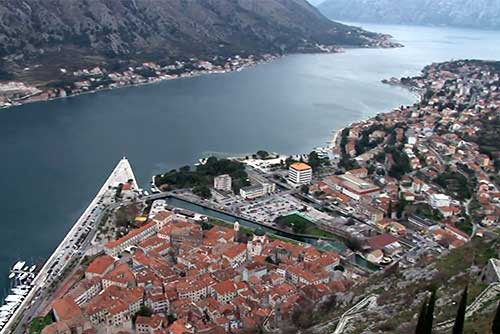
Tour Kotor – Perast Old Town – Island Our Lady of the Rocks
Kotor
Kotor is the center of Montenegrin tourism. Black mountains, blue sea and old Venetian buildings combine to create a beautiful landscape. From the first settlement by the ancient Greeks to the domination of Serbia, the Venetian Republic and the Austrian Empire. It’s a complex history.This history has permeated the city, leaving behind a colorful culture and landscape.
The 1979 earthquake that struck Kotor destroyed many of its cultural treasures, but ongoing restoration and reconstruction programs have restored the city to its medieval grandeur.There’s plenty to see, from religious buildings like St. Tryphon Cathedral and St. Nicholas Church to palaces like Palace Pima and the Palace of the Drago Family. The Old Town is small enough to explore in about an hour, so it’s best to take your time and savor it.
Kotor’s Old Town has a lot to offer, and it’s not too expensive, so you can feel good about wandering the alleys. Browse a variety of Montenegrin-inspired goods, including woodcarved figurines, bowls, jewelry, and lighting.
Follow the alleyways behind Kotor’s Old Town to the observation deck of Kotor Fortress. After you’ve had your fill of the quaint shops in the old town, you’ll gradually climb up the hill to the viewpoint, where the landscape changes slightly with altitude.The red-roofed Old Town, the blue Bay of Kotor, and Montenegro’s distinctive stone mountains combine to create a cool and beautiful view.People come from all over Europe to see the view from Kotor Fortress.
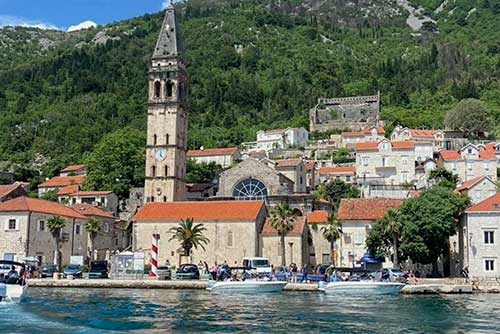
Perast
With huge, beautiful stone mountains to gaze at, a beautiful road to get there, and taxi boats to explore the mini-island and its surroundings, there’s plenty to see.
Located about 12 kilometers north of Kotor, Perast is a small town with a population of less than 400 people. Its history dates back to the 14th century, when it was a small fishing village, but it began to flourish when Kotor came under the control of the Venetian Republic in the 16th and 17th centuries. It’s a 25-minute Blue Line bus ride from Kotor, and due to its rugged terrain, it’s not easy to get to, but the numerous churches and other structures built over the centuries through the Middle Ages have been well preserved.
The town’s landmarks, St. George’s Island and Our Lady of the Rock, located 400 meters off the coast, are still visited by many tourists. Our Lady of the Rock is an artificial island created by the fishermen of Perast, who created the island in 1452 when a reliquary of the Virgin and Baby Jesus was found on its present site, and the fishermen hauled rocks to the spot and sank their ship to create the island. It is easily reached by boat from the Perast marina.
Budva + Sveti Stepan Course
Adriatic Jewels Tour: Saint Stefan – Budva – Tivat
Budva
With its small-town feel, Budva is a port city with turquoise waters, sandy beaches, and seaside walls that create a unique landscape of exotic Mediterranean architecture. Montenegro’s most iconic coastal city offers a stunning view of the blue Adriatic Sea and Ottoman-era walls. It’s one of the Balkans’ hidden gems, offering everything from historical sightseeing to relaxation.
Budva has a long history dating back to the 5th century BC. The old town, built during the Ancient Greek era, still stands today, while Venetian-style architecture from the time of the Venetian Republic (15th-18th centuries) fills the old town. It is interesting to see the cultural heritage of each period, such as the Saint Ivan Church from the 7th century, the Santa Maria in Punta Church from the 9th century, and the Holy Trinity Church, an iconic 19th-century building.
Don’t forget the natural environment.All around Budva you will find the dazzling Adriatic Sea and beaches where you can enjoy it 100%. As if to prove its reputation as Montenegro’s leading vacation city, parasols fill the beaches. From water sports to restaurants, cafes, and clubs on summer nights. Enjoy your trip to the beach.
Sveti Stefan
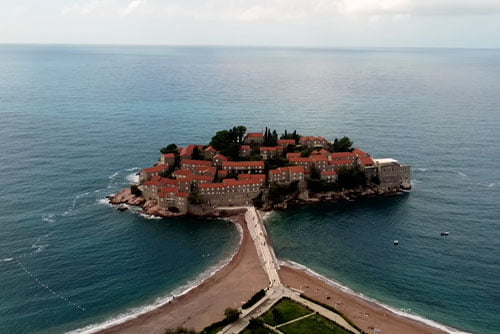
This rocky island resort is connected to the mainland by an isthmus and offers picturesque views.
A 30-minute drive south from Budva will take you to Sveti Stefan, a small island off the beach that’s a favorite sunset spot. The tiny island was once home to the Praskvica Monastery, built in the 15th century. In the 1950s, when the islanders left and luxury hotels were built, the island was connected to the mainland. Today it’s a five-star resort, and you can’t enter the island unless you’re staying at one of the resorts.
Durmitor National Park
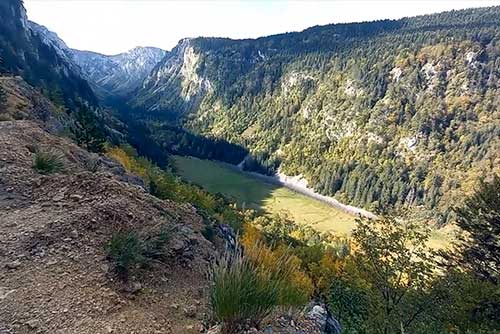
Durmitor National Park -Tara Bridge- Tara River- Black Lake
Montenegro means black mountains. As the name suggests, Montenegro is basically mountainous, especially the Durmitor National Park in the north, which is often called the Switzerland of the Balkans for its 2000-meter mountains. There is also a famous lake called Black Lake and the deepest gorge in Europe called Tara Gorge.
Dumitor National Park is a UNESCO World Heritage Site.
It’s a great area for trekking, camping, and rafting.