The best things to see and do in La Paz
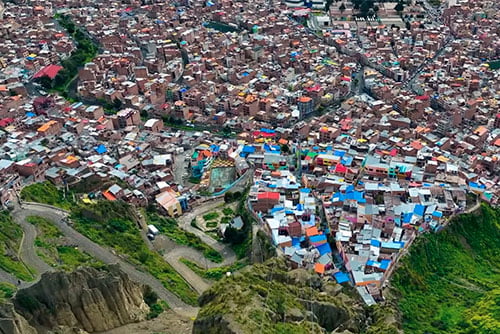
Located in the central-western part of the South American country of Bolivia, La Paz is the “highest administrative capital in the world”.
The average altitude of La Paz is 3650 meters. Due to its high altitude, La Paz is also known as the “City of Clouds”.
Here are some courses in La Paz that will give you a taste of the high altitude and South American culture.
Mirador Killi Killi
La Paz from the Killi Killi Observatory
Valle de Las Animas, Moon Valley and Killi Killi half day tour
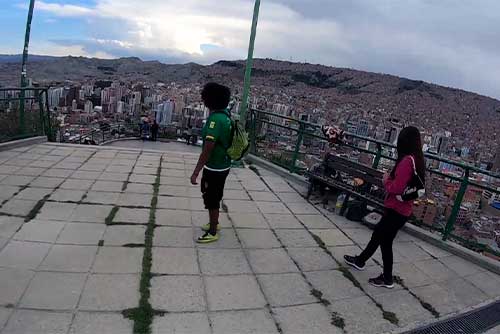
At 4,000 meters above sea level, the highest capital in the world, La Paz, offers a 360-degree panoramic view of the city from the Killikili Observatory. The night view from here is one of the best in La Paz. Street artists perform around the observation deck and there’s plenty to see. We recommend going at dusk to see the night view. The walk from downtown La Paz, a densely built-up area, to Kilikili, a series of endless hills, takes at least 30 minutes. There are many slums around, so it’s best to take a taxi in a group rather than walk down.
Valley of the Moon
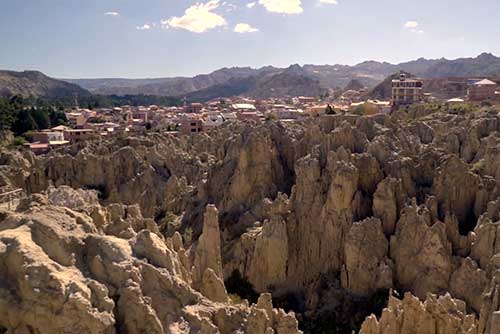
La Paz, City Tour and Valley of the Moon – Half day
The Valley of the Moon was created by the erosion of a mountain composed of mud-like clay over many years. It is said to continue to be eroded by rain and wind to this day. The Valley of the Moon is named because it feels so strange and mysterious, like you’re on the moon.
Astronaut Neil Armstrong, the first man to walk on the moon, visited the area and was said to have marveled at how “lunar-like” it was.
This is how the area, originally called the Valley of the Soul, was named the Valley of the Moon.
The Valley of the Moon also exists in neighboring Chile. The La Paz Valley of the Moon is smaller in size than its Chilean counterpart, but it more closely resembles the surface of the moon.
The sandy rocks have been eroded by rain and wind, giving the valley its shape. The valley is about a 40-minute drive from downtown La Paz.
Mi Teleferico
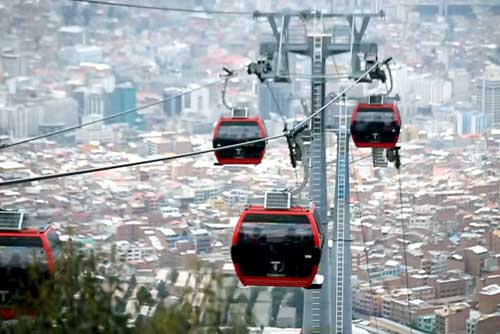
City Tour plus Cable Car La Paz
The cable car is La Paz’s public transportation system.
La Paz has an elevation difference of more than 850 meters within the city alone. In 2014, the city of La Paz opened a cable car to take advantage of this basin.
This was the first time a cable car played a pivotal role in the city’s public transportation system. The cable car has six lines.
The cable car is 21 kilometers long. Guinness has recognized the La Paz cable car as the world’s longest cable car system.
The cable car offers breathtaking views of the city. If you ride the La Paz cable car at night, the night view is spectacular.
Urban Rush Bolivia
Urban Rush: Building Rappel in La Paz
Urban Rush Bolivia is a leisure facility where you abseil down a rope from the 17th floor of a building.
The building is about 50 meters high. The building is the Presidente Hotel, a five-star hotel. The views from the building are spectacular.
Before the abseil, well-trained guides give a training session. Participants can choose the costume of their favorite superhero and wear it. You can also choose between falling with your head down (Rap Jumping) or standing upright (Traditional Rappel).
The equipment here is top-notch. It’s imported from the US and France. It was designed and built by experts from New Zealand, the United States, and Bolivia.
Jaen Street
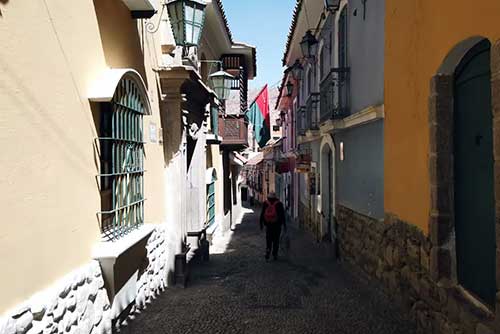
La Paz City Walking Tour Including Historical Streets
Jaen Street is a street that still looks like it did during La Paz’s Spanish rule (16th-19th centuries).
The street is located in the center of the old town. Jaen is the surname of Apolinar Jaén, who was active in the Bolivian War of Independence.
Jaén Street has many colorful buildings that make it very photogenic. There are many museums, workshops, and galleries along the street.
The Mamani Mamani Gallery is where you can see and buy works by the famous painter Roberto Mamani Mamani.
Juan de Vargas Museum
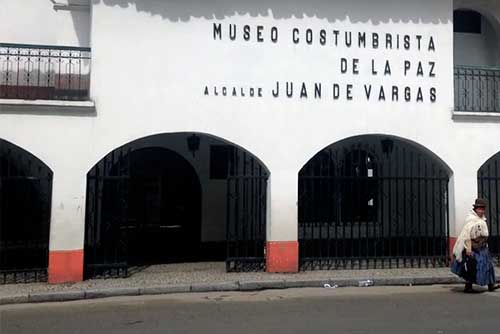
Cross the main street in front of Plaza de San Francisco and follow the map to Calle Jaen, where this museum presents Bolivian history in miniature. Miniature scenes of Tupacatari’s execution for resisting the Spanish conquistadors, General Murillo’s July 16, 1809 Revolution of Independence, and more are depicted in great detail. No photos are allowed.
Plaza Murillo
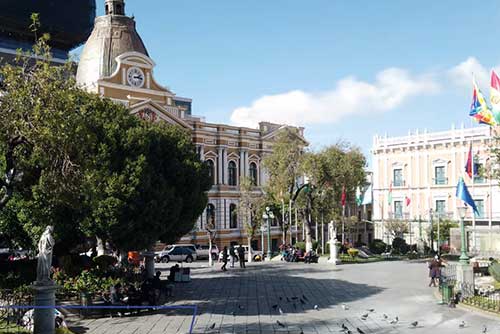
Customizable Private City Tour – La Paz
Roughly translates to “main square. It serves as the Plazade Armas, which is found in every large South American city. It’s the center of Bolivia’s administration, with important buildings surrounding it, including the main government building and bank headquarters. In the center of the square stands a statue of General Murillo, a hero of the Bolivian War of Independence. Due to the large number of people, including travelers, you should take extra precautions as theft and loss of belongings is common. It’s also best to walk around during the day and avoid the dark alleys. The plaza is also nicknamed “Pigeon Square” due to the large number of pigeons in the area.
Murillo Museum
The home of Don Pedro Domingo Murillo, who led the Bolivian Revolution on July 16, 1809, this red house has a wooden balcony jutting out from the corner of the second floor of the facade. Divided into five sections, the interior is filled with furniture and items used during his lifetime, as well as various collectibles, and is an example of the splendor of 19th-century colonial architecture.
The Witches’ Market
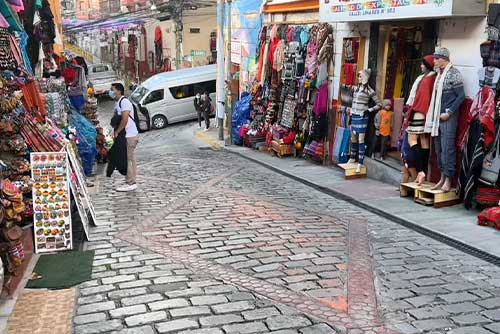
A traditional market in the center of La Paz. It was named “Witches’ Market” because it mainly sold herbs used to cure illnesses and amulets to ward off evil spirits. It is now an international indigenous market, but in the past, it sold many items with witchcraft significance. You’ll even find bizarre scenes of dried baby llamas hanging in the stalls for good luck. It’s a great place for travelers to find quality crafts and clothing made by indigenous people at affordable prices. Especially if you’re traveling to the Uyuni Salt Flats, you can pick up woolen hats, sanchos, and sweaters handmade by the indigenous people. They make great outfits for the Uyuni Salt Flats. Bargaining is a must. It’s usually a good idea to haggle for about half of what the vendor is asking.
Basílica de San Francisco
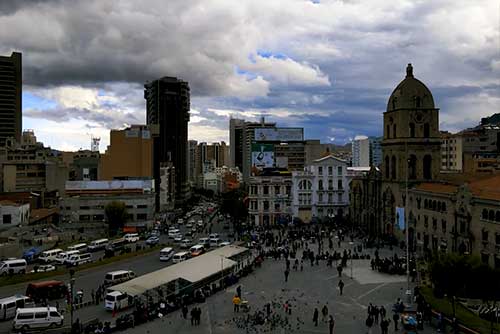
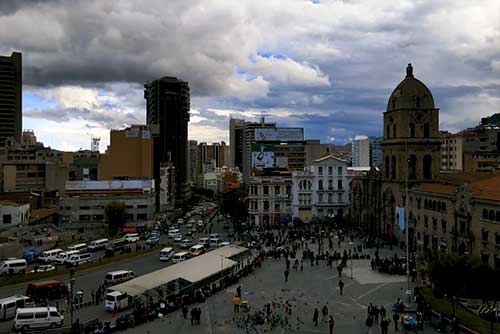
Private Half Day Tour of La Paz
The cathedral at the beginning of the Witch’s Market. It is one of the main churches in La Paz and is the most famous. It features a mix of European baroque style and indigenous South American culture. The church is open to locals and foreigners alike. Photography is prohibited inside the church, and it’s etiquette to remove hats and sunglasses during mass. From the top of the stairs, you’ll have a great view of the Plaza de San Francisco and La Paz city center. It’s also worth checking out the Centro Cultural Museo San Francisco (Church Museum of San Francisco), which is right next door to the cathedral.
La Paz means “peace” in Spanish.
We recommend visiting La Paz to find peace of mind while taking in the beautiful scenery.