7 must-visit hot spots in Český Krumlov

Český Krumlov is a small city in the Czech Republic’s South Bohemia region and is one of the last remaining medieval towns in the Czech Republic. It’s often called the “Pearl of Bohemia” or “Little Prague”.
Reminiscent of a smaller Prague, Český Krumlov has a unique townscape with a mix of old architecture and atmospheric restaurants. It’s small enough to be explored on foot, so you can feel like you’re taking a stroll.
There are many architectural and cultural monuments, including Krumlov Castle. The Old Town is a well-preserved example of Gothic, Renaissance, and Baroque architecture and is a UNESCO World Heritage Site.
Svornosti Square
(Nam. Svornosti)
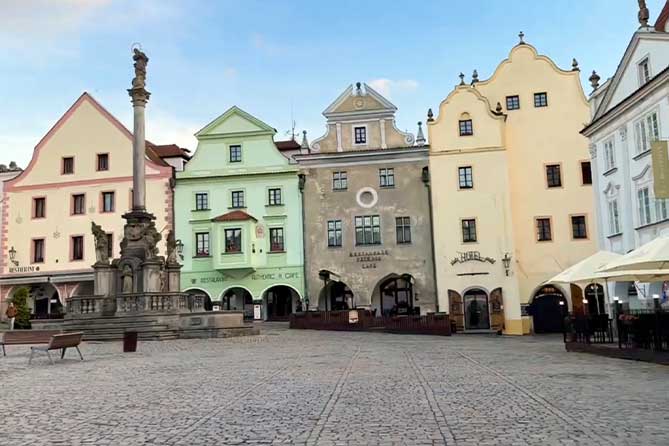
Located in the center of the Old Town, Svornosti Square is usually the starting point for tours of Cesky Krumlov. Standing in the center of the square, you feel like you’ve traveled back in time to the Middle Ages, as there are no buildings around that were built after the 18th century. The surrounding buildings are made in various architectural styles, including Late Gothic and Renaissance.
A statue of the Virgin Mary, erected to commemorate the victory over the Black Death, stands tall in the center of the small square, and hotels, souvenir shops, restaurants, and cafes surround it. In the winter, the Christmas market is held right here in Svornosti Square, and while it’s quite modest compared to Prague’s Christmas market, I remember it having a good variety of things to eat and see.
Barber’s Bridge
(Lazebnický most)
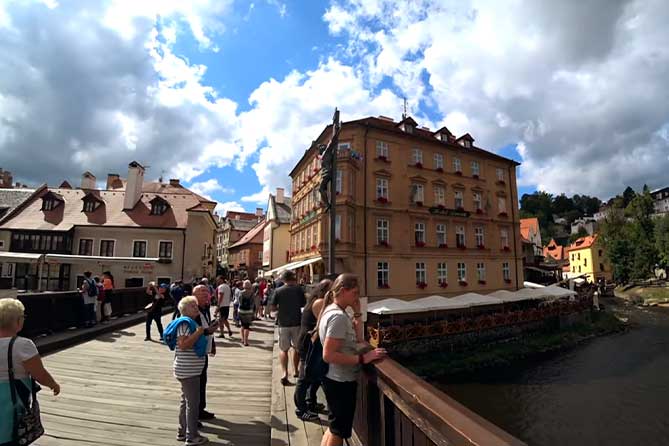
If you follow the alleyway from Svornosti Square towards Cesky Krumlov Castle, you’ll find Barber’s Bridge, which connects to the main street, Latran. Locals call it the Rajevnicky Bridge. It’s a wooden bridge over the Vltava River, and many travelers stay on it to take in the surrounding landscape.
Latrán Street
(Latrán)
This street starts after crossing the Barber’s Bridge and used to be the residence of the servants of the lords. It is a narrow alley lined with various shops, making it the main street. The street itself has preserved its medieval appearance and is fun to walk along. We recommend visiting the cafes and restaurants and taking your time.
Bear Moat
(Medvědí příkop)
Just before you enter Cesky Krumlov, you’ll notice the bears in the moat. It was in the 16th century, during the Rosenberg era, that bears were kept in the moat to defend the castle.

Best of Cesky Krumlov Old Town and Castle Exteriors
Český Krumlov Castle

Walking private guided tour in Cesky Krumlov with local certified guide
Český Krumlov Castle is located next to Latran Street. Built in the 13th century, the castle is disproportionately large for the city and is the second largest castle in the Czech Republic. It was transformed in the 18th century with the addition of a baroque theater. The castle retains the original lord’s palace, chapel, mint, baroque theater, and outdoor gardens.
Many of the walls of the buildings throughout the castle are decorated with sgraffito drawings. The sgraffito technique is a Western architectural craft, a self-help technique utilized in European architecture. It is a method of painting exterior walls and then scratching the surface before it hardens to reveal the underlying color, creating a three-dimensional sculpture from a distance.
Red Gate
The entrance to the castle. When the Rosenbergs owned the castle, they added an extension and painted the main gate the color of a rose, the symbol of the Rosenberg family, and it became known as the Red Gate.
Castle Tower
This is the best viewpoint in Cesky Krumlov Castle. It’s called the Hradek Tower, and you have to climb 162 steps to get there. The view from here is what most people recognize from photos of Cesky Krumlov. The view from the top of the tower is a sight to behold.
Cloak Bridge (Plášťový most/Cloak Bridge)
The Cloak Bridge, known locally as Plášťový most, is so named because it resembles a cloak. It is an arched bridge connecting the upper and lower parts of Cesky Krumlov Castle. In the past, it served as a fortress. It’s been preserved in its original form for 500 years, so it’s a collection of different architectural styles, including Gothic and Renaissance. The view from the Cloak Bridge is excellent, and it also serves as an observation deck.
Castle Theater
Built in 1767, the theater is one of the best-preserved Baroque theaters in the world. Due to its age, the theater is open to the public three times a year. It has been compared to European theaters such as the Royal Drottningholm Palace Theater in Sweden, the Queen’s Theater at the Palace of Versailles, and the Magravial Opera House.
Zámecká Garden
(Zámecká zahrada)
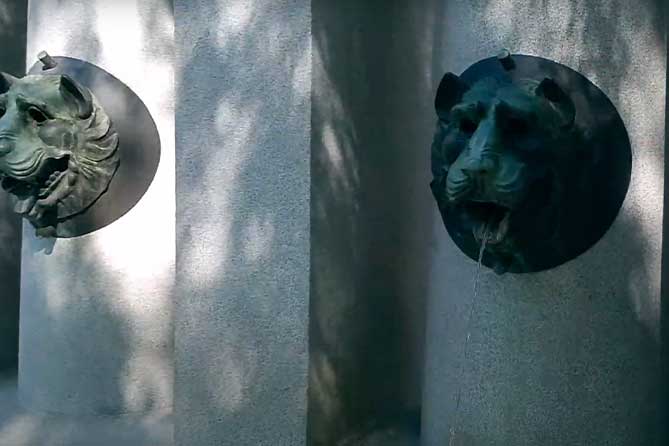
The gardens of Český Krumlov Castle, built in the 17th century in the Baroque style. The castle has four main gardens, with Zámecká being the largest. It is characterized by its elaborate arrangement of flower beds, fountains, and statues.
It’s a great place to enjoy a stroll through the well-maintained gardens or sit on a bench and feel the breeze. It is also known as a photogenic spot, with two large trees called the “twin trees” and the castle in the background.
Egon Schiele Art Centrum
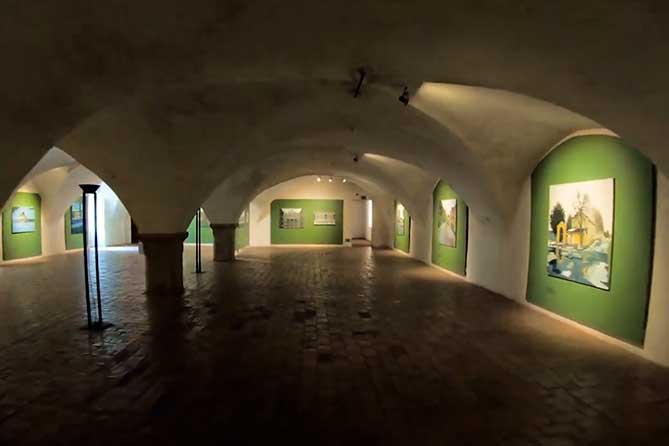
Cesky Krumlov is the hometown of Egon Schiele’s mother. As a young man, Egon Schiele stayed in Český Krumlov and painted many landscapes. However, he was not well-liked by the villagers, who forced him to use local teenage girls as models, and he was eventually expelled.
Today, a museum is dedicated to his memory. The largest collection of Egon Schiele’s work is at the Leopold Museum in Vienna, Austria. The Chesky Krumlov Egon Schiele Museum has some works on display that are copies, not originals, but it’s still a fascinating place for those who love the artist.