7 Hotspots You Must Visit In Buenos Aires
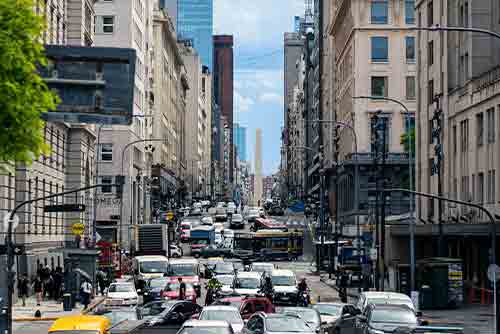
Buenos Aires is a city where the sound of bandoneons echoes through the streets. It’s a city that has a different charm by day and night.
From its colonial roots to its newest developments, stroll through its iconic streets and listen to the stories that Buenos Aires has to tell.
Like opening a box of chocolates, there’s something new to discover at every turn, so here are some of the best daytime spots and some of the best nighttime spots.
Explore street art
BA Street Art Tour
BA Street Art Walking Tour – Small Shared Group
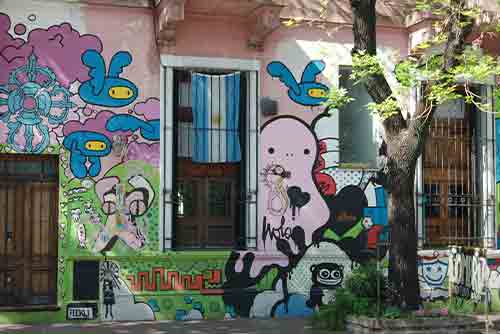
The Buenos Aires Street Art Tour is a tour that explores the street art of Buenos Aires.
Founded in 2009, BA Street Art supports local artists and helps fill the streets with colorful works.
Proceeds from the tour go back into funding future mural projects.
You’ll even get to see murals in places you won’t find in guidebooks, so it’s definitely worth the experience.
Tour the world’s most beautiful bookstore
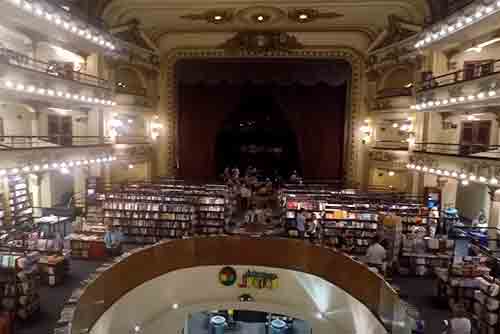
The Ateneo Grand Splendid
Premium Private City Tour of Buenos Aires + Teatro Colon + El Ateneo
A unique attraction in Buenos Aires,
Is it a palace? Or a bookstore? As soon as you step inside El Ateneo Grand Splendid, you’ll be confronted with an awe-inspiring sight. As you might have guessed from the grand stage, red curtains, and elegant balconies, El Ateneo Grand Splendid is a world-renowned bookstore housed in a building that was originally used as a theater.
It hosted numerous performances starting in 1919, became a movie theater in the late 20th century, and was transformed into a bookstore in February 2000 to sell books and records. Architect Fernando Manzone preserved many of the original features, including the ceilings, ornate carvings, stage curtains, and lighting, during the renovation.
The historic venue, where Argentina’s first planetary movie was shown in 1929, has become a favorite bookstore for people from all over the world, attracting more than one million visitors every year. It is said to be the most beautiful bookstore in the world, and you can read from the seats on the stage, which makes for a unique reading experience.
Start your trip to Buenos Aires
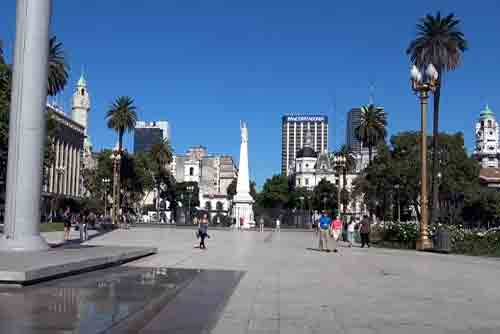
Plaza de Mayo
Plaza de Mayo: The Heart of Buenos Aires Private Walking Tour
May 25, 1810, is the day Argentina declared its independence from Spain. The Plaza de Mayo, also known as the Plaza de Mayo or Plaza de Mayo, is the first place most travelers to Buenos Aires head to. It’s where all the major events of the early 18th century took place, including the May Revolution, which marked the beginning of Argentina’s independence.
The main equestrian statue in the square is of General Manuel Belgrano, a hero of the independence movement. Surrounding the square are the main attractions, including the Presidential Palace, Casa Rosada, and Buenos Aires Cathedral.
The pink glow of the Presidential Palace
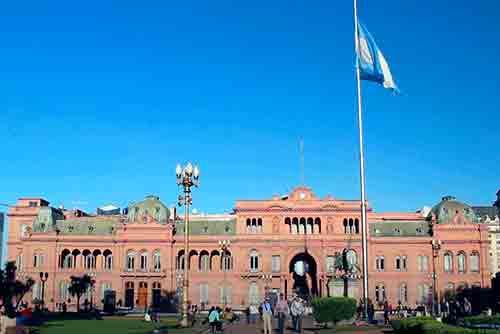
Casa Rosada
Private guided Walking Tour Plaza de Mayo y Casa Rosada
Located in the Plaza de Mayo, Casa Rosada is the presidential palace of Argentina. The name means “pink mansion,” and its eye-catching pink exterior has been a part of some of Argentina’s most important historical moments. Originally built as a fortress, construction began in 1873 and lasted 94 years. It’s said that then-President Sarmiento chose the pink color for the building’s exterior to reflect the colors of the rival political parties, red and white, respectively, in an attempt to ease tensions between the two factions. Important speeches echoed from the balconies facing the plaza. Casa Rosada is beautiful by day, but in the evening it takes on a new face when illuminated. Here are some nighttime shots of the landmark, which takes on a more dramatic pink hue at night.
The world’s widest avenue
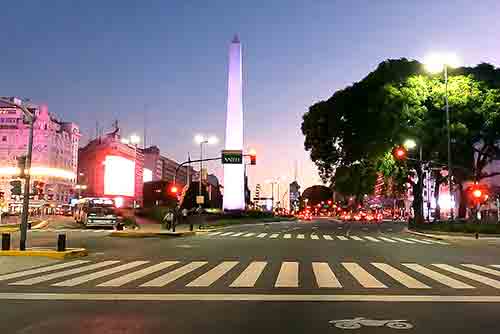
Avenida 9 de Julio
Buenos Aires City Tour
The world’s widest avenue is located in Buenos Aires. At 140 meters wide, it was a proposal by Mayor Alvear. French landscape architect Charles Thays designed the green spaces along the avenue. July 9 refers to July 9, 1816, the anniversary of Argentina’s independence.
The tall tower in the middle of the boulevard serves as a compass to help travelers avoid getting lost. The obelisk is also a symbol of Buenos Aires. Inside the 67-meter-high obelisk made of reinforced concrete, there is a staircase that allows you to climb to the top of the tower. It serves as the Korean equivalent of Gwanghwamun Square, where protests sometimes take place and soccer matches are often cheered on.
The Birthplace of the Tango
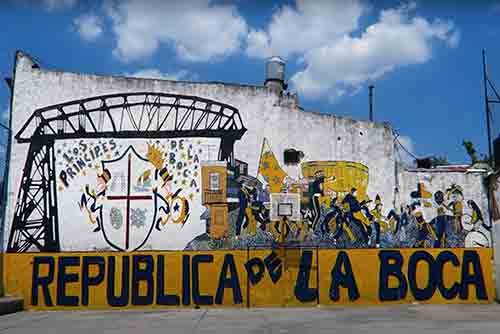
La Boca
La Boca Walking Tour
Home to Buenos Aires’ first docks, the La Boca neighborhood was a hotspot for immigrants. After a hard day’s work, these immigrants would flock to the taverns that lined the streets to relieve their tiredness and nostalgia by dancing.
In La Boca, the birthplace of tango, the bandoneón still echoes today, and you’ll find tango dancers everywhere. When you walk down Caminito street in La Boca, you’ll be drawn to the colorful buildings.
It originated when immigrants who settled around the port brought leftover materials and paint to paint their homes, and later the local painter Benito Kinkela Martín gave it an even more beautiful color. Considered one of the most beautiful streets in Argentina, Caminito is like a street art gallery. Along the way, you’ll find unique souvenir shops, restaurants, bars, and more.
best nightlife spots for walking
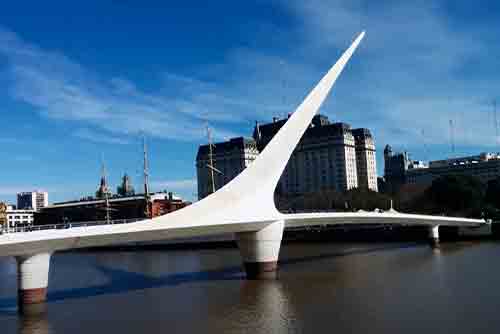
Puerto Madero & Woman’s Bridge
Puerto Madero and San Telmo Half Day Private Tour
The romance of the harbor is only in the harbor.
After nearly 100 years of neglect, the redeveloped canals of Puerto Madero are now the hottest neighborhood in Buenos Aires. With skyscrapers popping up one after another, including high-end hotels, shopping centers, and the offices of multinational corporations, it’s full of life. It’s also home to an up-and-coming food scene. Former dock warehouse buildings have been renovated and transformed into hip restaurants. Puerto Madero’s rapidly changing topography has attracted the attention of port cities around the world.
One of the things that makes the city so special is the Puente de la Mujer (Woman’s Bridge) in the La Pazo district, a serene, white, pointed structure that is an iconic symbol of Puerto Madero. It’s called the Woman’s Bridge because Puerto Madero has many streets named after women.
The magic hour begins at dusk in Puerto Madero, where the futuristic skyscrapers and the river create an exquisite harmony.
You can’t help but be mesmerized by the reflection of the sunset on the buildings and the ripples of the river. The sounds of tango echoing through the streets also contribute to the atmosphere.
Walking here in the middle of the day can be a bit strenuous, so head to the Bridge of Saints before sunset to get the best nighttime view.
The rest of the night is best spent at one of the atmospheric bars.